
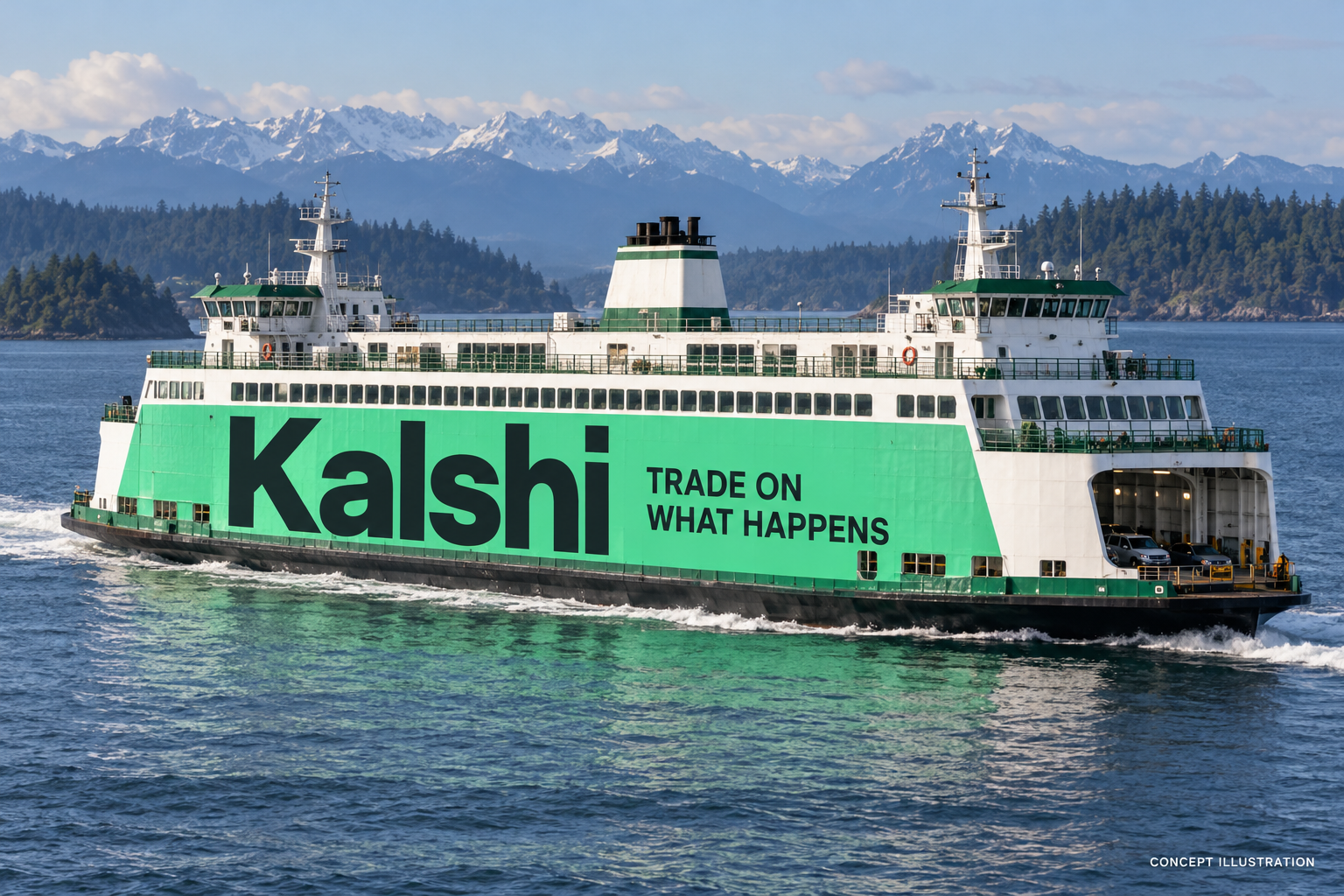
Washington already offers ferry passengers a gambling experience: you buy a ticket and hope your boat shows up. We should introduce a version that generates revenue. Put slot machines on the ferries. A small gaming lounge, operated by a private concessionaire, could turn an otherwise uneventful crossing into a modest contribution toward keeping the boats running. You get entertainment. The state gets money. Your spouse gets another reason to insist you stay in the car.
The commercial opportunity is sitting there, drinking ferry coffee. Millions of passenger trips every year, a spectacular waterfront setting, and stretches of time during which the principal entertainment is watching somebody’s car alarm go off downstairs. Private operators should be invited to bid for that audience. They would pay for installation, equipment, dedicated staff and security, then give Washington a negotiated share of the proceeds. If the opportunity is as good as it sounds, somebody should be willing to risk their own money proving it.
This is an ordinary capitalist proposition. The state owns a useful asset; businesses compete for access; customers decide whether to spend. We already understand how concessions work when the product is a pretzel. Introducing a payout mechanism should not require us to abandon the concept. Auction the licenses transparently, allow qualified tribal and nontribal businesses to compete under whatever new authorization is required, and make the contracts expensive enough to benefit the public.
There is also a maritime question worth examining. Gambling laws can distinguish between activity on land and aboard vessels, with some federal exceptions depending on a voyage’s location and itinerary. Could a legally authorized ferry operation fit an exception—or justify creating one? Have the lawyers investigate. But “it’s a boat” is an opening question, not a legal opinion: Puget Sound is not automatically beyond Washington’s jurisdiction, and federal law expressly regulates gambling devices aboard vessels. Any necessary exemptions would have to be enacted, rather than discovered by unplugging the machines whenever somebody in uniform boards.
The potential return is worth a pilot. An illustrative systemwide model puts Washington’s share at roughly $7 million annually before added public costs, with considerably lower or higher returns depending on participation and spending. That is an assumption-based estimate, not money Olympia should spend in advance. Let the bidders examine the traffic, crossing times and available space. Their offers would tell us more about the opportunity than another enthusiastic newspaper article, including this one.
What’s the ferry jackpot?
Adjust the assumptions. See what each route could contribute to Washington’s annual receipts.
A scenario, not a forecast. The model assumes 80% of passenger trips are by eligible adults. Receipts are not net public profit. A limited pilot would earn less than this full-system illustration.
Assumptions, sources and limitations
Annual gaming revenue = passenger trips × 80% assumed eligible adult share × participation × average player loss after prizes. State receipts = gaming revenue × state share. The default is 10% participation, $15 average loss and a 30% state share. The lower case uses 5% and $10; the higher case uses 15% and $20. Both keep the 30% state share.
These percentages and spending levels are editorial assumptions, not measured ferry gambling behavior. Every route uses the same assumptions; actual demand would vary with crossing time, passenger mix, gaming capacity and season. No machine-capacity or session-duration constraint has been modeled. The calculation excludes public regulation costs, gambling harms and displacement from existing gambling businesses. Operator expenses come out of the operator’s retained share and could affect bids.
Passenger trips include drivers, children and repeat travelers; 20.1 million trips does not mean 20.1 million unique customers. Route groups count sailings in both directions, not assignments of individual vessels. The route figures sum to 150,505 sailings; the year-in-review reports 150,506.
Sources: WSF 2026 Fact Sheet (2025 route data) and 2025 Year in Review. Revenue scenarios calculated by Father Time. Gambling aboard these ferries is a proposal requiring legal authorization, not an existing licensed service.
Keep the experiment small and optional. Start on a longer crossing, separate the lounge from ordinary seating, check identification, and require operators to cover the costs they create. Nobody should have to walk through a casino to reach the bathroom. Machines should stop taking bets before arrival, because “I was one spin away” cannot become a recognized excuse for blocking the vehicle deck. If the concession interferes with transportation, the concession loses.
There are legitimate objections. Gambling can cause serious harm, and some revenue would be diverted from existing businesses rather than conjured out of the sea. Operators should fund safeguards and treatment contributions, and the pilot should publish its costs as openly as its receipts. But adults can reasonably be allowed to make a limited entertainment choice without the state pretending the choice is harmless. The test is whether the arrangement produces a worthwhile public benefit after its costs are counted.
Slot machines will not repair an engine or train a captain. They might, however, help pay for both. Washington should invite serious proposals, investigate the legal route and see whether private capital can turn a little unused passenger space into dependable revenue. If the economics fail, pull the machines out. If they work, we will finally have something aboard a ferry that is supposed to take your money without getting you anywhere.
Leave a Reply